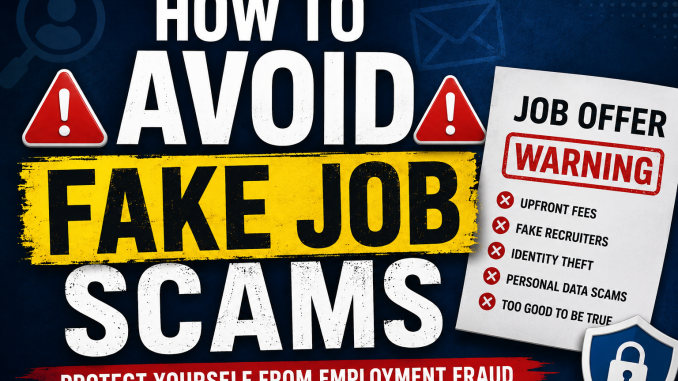
How to Avoid Fake Job Scams: A Complete Guide for Job Seekers in 2026
Introduction
Finding a job online has never been easier. Thousands of job opportunities are posted daily on recruitment websites, social media platforms, company career pages, and mobile apps. However, as legitimate job opportunities continue to grow, so do fake job scams.
Job scammers target unemployed individuals, graduates, remote workers, and professionals looking for better opportunities. Their goal is simple: steal your money, personal information, or both.
According to cybersecurity experts, employment scams are among the fastest-growing forms of online fraud worldwide. Scammers know that people searching for jobs may be under financial pressure, making them more vulnerable to deceptive offers.
This guide will teach you how to identify fake job offers, recognize warning signs, protect your personal information, and safely search for legitimate employment opportunities.
What Are Fake Job Scams?
A fake job scam occurs when criminals pretend to offer employment opportunities to trick job seekers into providing money, banking information, identity documents, or personal details.
These scams often appear legitimate because fraudsters use professional-looking emails, websites, company logos, and even fake interviews.
Common goals of fake job scams include:
- Identity theft
- Financial fraud
- Banking scams
- Data collection
- Money laundering schemes
- Unauthorized access to personal accounts
Many victims only discover the scam after losing money or having their identity stolen.
Why Job Scams Are Increasing
Several factors have contributed to the rise of employment fraud:
1. Growth of Remote Work
Remote jobs have become extremely popular. Scammers exploit this trend by advertising fake work-from-home opportunities.
2. High Unemployment Rates
When competition for jobs increases, people may act quickly without thoroughly verifying opportunities.
3. Social Media Recruiting
Platforms such as LinkedIn, Facebook, Telegram, WhatsApp, and Instagram are now commonly used for recruitment. Scammers often create fake recruiter profiles.
4. Easy Website Creation
Fraudsters can quickly build professional-looking websites that imitate legitimate companies.
Common Types of Fake Job Scams
Fake Work-from-Home Jobs
Scammers advertise simple online tasks with unusually high pay.
Examples include:
- Data entry jobs
- Typing jobs
- Survey jobs
- Product reviewing
- Online assistant positions
Many of these jobs require upfront payments or never actually exist.
Fake Recruitment Agencies
Fraudsters create fake agencies claiming they can secure employment if you pay registration fees.
Legitimate recruiters are typically paid by employers, not job seekers.
Reshipping Scams
Victims are hired as “package processors” or “shipping coordinators.”
The packages often contain stolen goods purchased using fraudulent credit cards.
Fake Government Jobs
Scammers impersonate government departments and ask candidates to pay for application processing.
Most government job applications do not require such payments.
Overseas Employment Scams
Victims receive offers for jobs abroad with excellent salaries and benefits.
Scammers then request money for:
- Work permits
- Visa processing
- Accommodation
- Medical examinations
- Travel arrangements
After payment, the recruiter disappears.
Interview Scams
A candidate receives an immediate job offer without any proper interview process.
The scammer then requests personal information or payment.
Top Warning Signs of a Fake Job Offer
1. You Are Asked to Pay Money
This is the biggest red flag.
Legitimate employers do not charge applicants for:
- Interviews
- Training
- Equipment
- Application forms
- Background checks
If someone asks for money before employment begins, proceed with extreme caution.
2. Unrealistically High Salary
Be suspicious when a job promises:
- Huge income
- Little experience required
- Minimal work
- Immediate hiring
If it sounds too good to be true, it usually is.
3. No Formal Interview
Most genuine employers conduct:
- Phone screenings
- Video interviews
- In-person interviews
- Skills assessments
Instant hiring without evaluation is uncommon.
4. Generic Email Addresses
Legitimate companies generally use professional business email addresses.
Examples:
Good:
Suspicious:
5. Poor Grammar and Spelling
Many scam messages contain:
- Grammar mistakes
- Awkward wording
- Poor formatting
Professional recruiters usually communicate clearly and professionally.
6. Pressure to Act Quickly
Scammers often create urgency.
Examples include:
- “Apply today or lose your chance.”
- “Send payment immediately.”
- “Limited positions available.”
This pressure discourages victims from verifying information.
7. Requests for Sensitive Information
Avoid sharing:
- Banking details
- PIN numbers
- Passwords
- One-time passwords (OTPs)
- Tax information
- Identity documents before verification
Legitimate employers only request sensitive information during official onboarding processes.
How to Verify a Job Offer
Research the Company
Search for:
- Official website
- Physical address
- Phone number
- Company registration details
- Online reviews
A legitimate business should have a visible online presence.
Check the Company Website
Visit the company’s careers page.
Confirm that the advertised position appears there.
Search for Scam Reports
Type the following into a search engine:
“Company Name scam”
or
“Company Name fake jobs”
Previous victims may have reported fraudulent activity.
Verify Recruiter Profiles
If contacted through LinkedIn or social media:
- Check profile history
- Review connections
- Examine activity
- Confirm employment details
Fake recruiter profiles often have limited information.
Contact the Company Directly
Call or email the company using contact details from its official website.
Ask whether the job advertisement is genuine.
How Scammers Steal Personal Information
Identity theft is one of the most serious consequences of employment fraud.
Scammers may request:
- Passport copies
- National ID cards
- Driver’s licenses
- Utility bills
- Banking details
These documents can be used to:
- Open fraudulent accounts
- Apply for loans
- Commit financial fraud
- Conduct criminal activities
Never send personal documents until you verify the employer’s legitimacy.
Safe Job Search Practices
Use Trusted Job Platforms
Stick to reputable job boards and official company websites.
Trusted platforms often have fraud detection systems.
Enable Two-Factor Authentication
Protect:
- Email accounts
- LinkedIn accounts
- Job portal accounts
Two-factor authentication adds an additional layer of security.
Create a Professional Resume
Avoid including:
- Full banking details
- Identity numbers
- Passwords
- Confidential personal information
Share only information necessary for recruitment.
Keep Records
Save:
- Emails
- Job descriptions
- Recruiter messages
- Contracts
Documentation can help if a scam occurs.
Trust Your Instincts
If something feels suspicious, investigate further before proceeding.
Social Media Job Scams
Many scammers now operate through:
- Facebook groups
- WhatsApp groups
- Telegram channels
- Instagram pages
Common signs include:
- Guaranteed employment
- Upfront payments
- No qualifications required
- Extremely high earnings
Always verify opportunities independently.
Fake Remote Job Scams
Remote work scams are becoming increasingly sophisticated.
Popular fake roles include:
- Virtual assistants
- Data entry clerks
- Customer service representatives
- Online chat agents
- Product reviewers
Red flags include:
- Immediate hiring
- Excessive salaries
- Requests to purchase equipment using personal funds
- Unverified companies
Research every remote employer thoroughly.
What to Do If You Have Been Scammed
If you suspect you have fallen victim to a fake job scam:
Stop Communication Immediately
Do not send additional information or money.
Contact Your Bank
If financial information was shared, notify your bank immediately.
Change Passwords
Update passwords for:
- Email accounts
- Banking apps
- Social media accounts
- Job portals
Report the Scam
Report fraudulent activity to:
- Local law enforcement
- Consumer protection agencies
- Cybercrime reporting centers
- Job platforms where the scam appeared
Monitor Your Accounts
Watch for:
- Unauthorized transactions
- Suspicious logins
- Identity theft indicators
Early detection can reduce damage.
Tips for Students and First-Time Job Seekers
Young job seekers are frequent targets because they may have limited experience with recruitment processes.
Remember:
- Never pay for a job.
- Research every employer.
- Verify recruiters independently.
- Avoid sharing unnecessary information.
- Discuss suspicious offers with trusted adults or mentors.
Taking a few extra minutes to verify an opportunity can prevent major losses.
The Future of Job Scams
As technology evolves, scammers are becoming more sophisticated.
Emerging threats include:
- AI-generated recruiter profiles
- Deepfake video interviews
- Fake company websites
- Automated phishing campaigns
Job seekers must remain vigilant and prioritize verification before sharing information.
Conclusion
Job scams continue to affect thousands of people every year. While fraudsters are becoming more sophisticated, most fake job offers still reveal warning signs such as upfront payment requests, unrealistic salaries, poor communication, and suspicious recruitment practices.
The best defense is awareness. Always research employers, verify job listings, protect your personal information, and never send money to secure employment.
A genuine employer wants your skills and experience—not your money.
By following the safety tips in this guide, you can confidently search for legitimate opportunities while avoiding costly employment scams.
Stay alert, stay informed, and protect your career journey from fraud.
Leave a Reply